
Hiring security guards is messier than most business owners expect. You think you just ring a company, they send someone, job done. Then you’re dealing with guards who don’t show up, companies that vanish when problems arise, invoices that don’t match what was agreed.
Getting security wrong costs more than just the wasted money on useless guards. Your property sits vulnerable. Staff feel unsafe. Insurance might refuse claims if your security wasn’t adequate. One Manchester warehouse owner told us they went through four different security companies in eight months before finding one that actually worked.
The security industry in the UK is huge. Thousands of companies, tens of thousands of guards. Some brilliant, some terrible, most somewhere in between. Telling them apart before you’ve signed contracts and handed over money is the tricky part.
We’ve been doing this across Yorkshire and into Greater Manchester since 2014. Watched the industry change, regulations tighten, technology evolve. Helped businesses fix security disasters after they learned the hard way what happens when you hire based purely on whoever sounded convincing.
This isn’t a quick checklist. It’s a proper walkthrough of hiring security guards without getting burned. Takes time but saves you from expensive mistakes that cost way more than the effort of doing it properly.
Complete Guide to Hiring Security Guards for Your Business
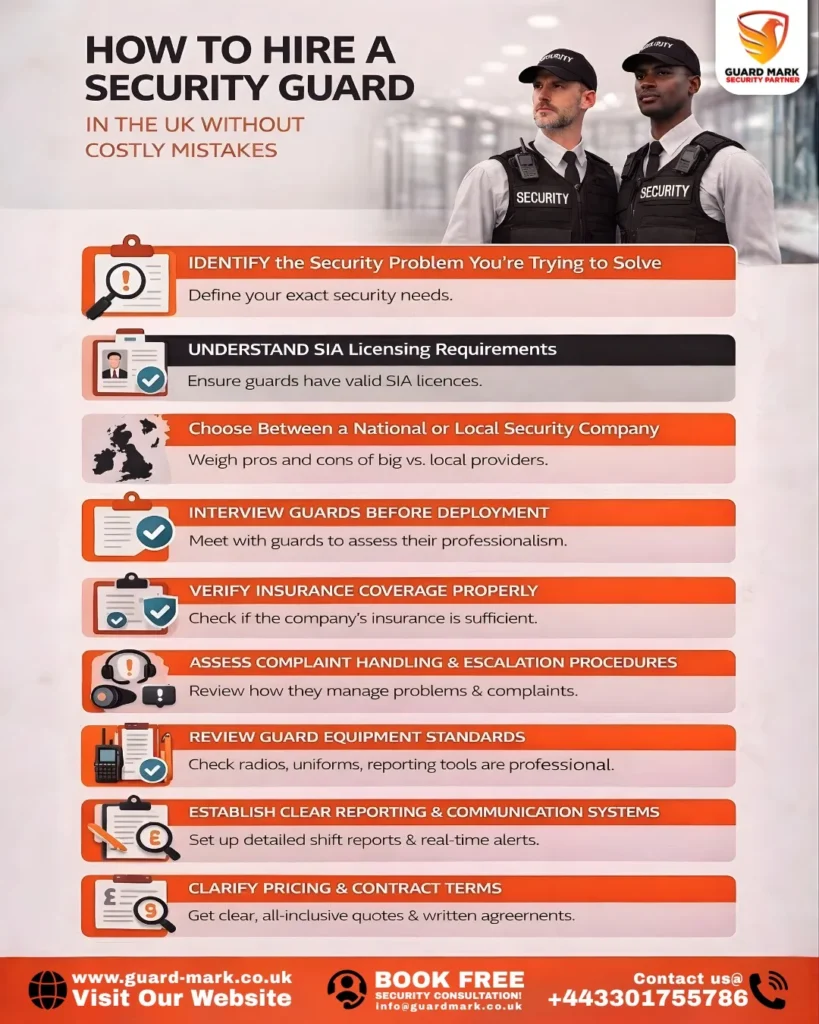
Step 1: Figure Out What Problem You’re Actually Trying to Solve
Sounds obvious but half the businesses hiring security haven’t really thought what they need guards to do. Just know they “need security” because something happened or someone suggested it.
Sit down and write out the actual problem.
-
Getting burgled repeatedly?
-
Staff parking getting vandalised?
-
Rough sleepers camping in your loading bay?
-
People sneaking onto your premises after hours?
Each problem needs different solutions.
Your building type changes everything. Securing a retail shop in a shopping centre is completely different from securing an industrial warehouse on the outskirts of town. Office building security isn’t the same as construction site security.
Think about when problems actually occur. If all your issues happen Friday and Saturday nights between 11pm and 4am, hiring 24/7 security is overkill. Target your coverage to when risks are highest.
Consider whether you need guards physically on site at all times, or whether scheduled patrol visits would solve the problem. Static guards provide constant presence and maximum deterrence. Mobile patrols provide visible checks, rapid response, and cost-effective protection during key risk periods.
Flexible Security That Fits Your Risk
Ideal for targeted coverage during high-risk hours — without compromising protection.
Look at what you’ve tried already. Basic CCTV that didn’t stop anything? Better locks that criminals still got past? Understanding what failed helps identify what might actually work.
Talk to neighbouring businesses about their security experiences. What works for the warehouse next door might work for you. What failed for them you can avoid.
Insurance requirements might dictate certain security measures. Check your policy before hiring anyone. Some insurers require specific guard numbers or patrol frequencies. Meeting those requirements affects what you need.
Write all this down before contacting companies. Your written requirements document becomes the foundation for everything that follows. Vague ideas lead to vague proposals that won’t solve your problems.
Step 2: Learn What SIA Licences Actually Mean and Why They Matter
Security Industry Authority runs licencing in the UK. Every guard needs one. Companies need approval. Sounds bureaucratic but it’s the only reliable way to know someone’s legitimate.
Different licences exist for different roles. Door supervisors working pubs and clubs need specific licences. Guards protecting buildings need different ones. CCTV operators need separate licences. You can’t just hire “a security guard” and assume they’re licenced for what you need.
Licences prove someone passed training, cleared background checks, and is legally allowed to work security. Without one, they’re just someone in a uniform pretending to be a guard.
Check the SIA website register before hiring anyone. Type in a name or licence number. Takes 30 seconds. Shows if they’re actually licenced and what they’re approved to do.
Licence expiry dates catch people out. Valid today doesn’t mean valid next month. Ask about renewal status if expiry is soon. Guards working with expired licences are breaking the law and so are you for using them.
Some companies use unlicenced guards gambling they won’t get caught. Saves them money on training and licencing fees. You’re the one facing legal problems when it goes wrong though.
SIA prosecutes companies and individuals working without licences. Fines, criminal records, banned from the industry. It’s serious. Don’t risk it because someone seemed nice or their price was tempting.
Cities like Manchester have loads of security companies because the market’s big. Competition is good but also means more operators cutting corners. Verify everything yourself, don’t trust claims.
Photo ID on licences should match the person. Sounds basic but guards sometimes try using someone else’s licence. Always check.
Step 3: Work Out If You Want a Big Company or a Smaller Local Outfit
National security companies versus local operators. Both have advantages, both have problems. You need to figure out which suits you better.
Big national firms have brand recognition, standardised procedures, backup staff capacity. They won’t go bust suddenly. They’ve got corporate infrastructure handling payroll, HR, compliance. Professional but impersonal.
Smaller local companies know the area better. Guards probably live nearby. Management is accessible. More flexible on contract terms. Service feels personalised. But they might struggle if multiple guards call in sick simultaneously.
Big companies sometimes treat smaller clients as afterthoughts. If you’re spending £2,000 monthly and they’ve got clients spending £50,000 monthly, guess who gets attention when problems arise?
Small companies might offer keener pricing because they’ve got lower overheads. But cheap often means something’s being sacrificed. Training, vetting, guard wages, insurance coverage.
Ask how long companies have operated. Five years minimum shows they survived tough periods. Brand new companies might be great or might fold in six months leaving you stranded.
Check if they operate locally or just claim to. Some national companies “cover” Manchester but their nearest office is 60 miles away. Response times and local knowledge suffer.
Local reputation counts for a lot. Companies working the same area for years build relationships with police, other businesses, even the criminals who know which sites to avoid.
Speak to their actual clients not just provided references. Ring businesses using their security and ask honest questions. You’ll get real sense of whether company size and style matches your needs.
Step 4: Interview Guards Before They Start Not After They’ve Messed Up
Most companies assign guards to your site and that’s that. You meet them first shift. Sometimes they’re brilliant. Sometimes they’re disasters. Too late to object once they’re already working.
Insist on meeting guards before they start. See how they present themselves. Ask questions about their experience. Judge if they’re someone you want representing your business.
Professional appearance matters. Scruffy uniform, poor hygiene, sloppy attitude. These people are the face of security at your premises. First impressions count.
Communication skills are critical. Guards need to write reports, speak to staff and visitors, call police if needed. Someone who can barely string sentences together will struggle.
Experience in similar environments is valuable. Guard who’s done five years in retail understands retail challenges. Construction site experience, warehouse security, whatever matches your needs.
Ask about their availability and reliability. Can they commit to the shifts you need? Transport to your site? History of calling in sick constantly?
References from their previous roles if they’re new to the company. What did past employers say about their work? Were they reliable, professional, competent?
Some guards are brilliant at certain environments but terrible at others. Aggressive door supervisor might be great for nightclubs but completely wrong for quiet office building.
Training they’ve completed beyond basic SIA requirements. First aid, fire safety, customer service, conflict management. More skills mean more capability.
Watch for attitude problems. Guards who think they know everything, who are dismissive of your concerns, who seem more interested in their phones than the conversation. Those problems only get worse.
Trial periods let you evaluate guards in actual work before committing long-term. Week or two where either party can walk away if it’s not working. Sensible protection for both sides.
Step 5: Understand the Insurance Situation Before Something Goes Wrong
Insurance sounds boring until you need it. Then suddenly it’s everything. Security companies need proper insurance but many skimp on it or let policies lapse.
Public liability covers if guards damage your property or someone gets injured during their work. £5 million minimum is standard. £10 million is better and shows financial strength.
Ask to see actual insurance certificates not just verbal assurances they’re insured. Certificates show coverage amounts, dates, underwriter details. Verify they’re current not expired.
Some companies carry bare minimum coverage to tick the box. When serious incidents happen, minimum coverage might not be enough. Better insured companies cost slightly more but that’s money well spent.
Employer’s liability protects guards if they’re injured working your site. Legally required if the company employs people. Check this exists and is current.
Professional indemnity is often forgotten. Covers when the company fails to deliver security properly. Guard missed something, didn’t respond appropriately, gave you bad advice. This insurance handles those claims.
Your own insurance probably requires security providers carry certain coverage levels. Check your policy terms. Using underinsured security could void your own insurance if something happens.
Call the insurance company listed on certificates to verify policies are real. Fake certificates exist. Quick phone call confirms coverage is genuine.
Guard working without the company’s insurance are huge liability for you. If they’re injured or cause damage, claims might come directly to you instead of the company’s insurance.
Step 6: Test How Companies Handle Problems Before They’re Your Problem
Sales process shows you how companies behave when they want your business. What about when things go wrong and they’ve already got your business?
Ask specifically about their complaints procedure. How do clients raise issues? Who handles complaints? What’s the resolution process? Companies with clear procedures handle problems better.
Request examples of how they’ve resolved past client issues. Not theoretical “we’d handle it professionally” but actual situations and outcomes. Shows you their problem-solving approach.
Response times for urgent issues matter. Guard doesn’t show up for shift, who do you call and how fast do they get cover? Guard does something unacceptable, how quickly does management respond?
Backup guard availability when assigned guards are sick or on holiday. Do they have a pool of trained guards ready? Or will they scramble trying to find anyone available?
Talk to their references specifically about problems and resolution. Every contract has issues. Reference experiences with problem-handling are more informative than stories about everything going perfectly.
Small test during hiring process reveals a lot. Ask a complicated question or raise a concern. See how they respond. Defencive and dismissive or professional and solution-focused?
Management accessibility when you need them. Can you reach decision-makers or just low-level staff with no authority? Problems need people with power to fix them.
Escalation paths if normal channels don’t resolve issues. Who’s above the account manager? Can you contact senior management? What options exist if you’re dissatisfied?
Contract terms around service failures and remedies. What happens if they don’t deliver agreed service? Are there penalties, service credits, easy exit options?
Some Manchester security companies are great at sales but terrible at service. They get lots of new clients but lose them constantly. That churn tells you something about how they handle ongoing relationships.
Step 7: Check What Equipment Guards Actually Show Up With
Guards arriving with professional equipment work better than guards carrying cheap torches and their personal mobile phone.
Two-way radios for sites with multiple guards. Mobile phones have dead spots, batteries die, calls don’t always connect. Radios are reliable communication backups.
Torches need to be powerful professional models not £3 ones from supermarkets. Security work happens in darkness. Weak torches are useless.
Hi-visibility clothing makes guards visible to anyone approaching. Deters criminals who see there’s security present. Also safety requirement in many environments.
Reporting equipment whether tablets, phones, or notebooks. Professional guards document their shifts properly. Can’t do that without proper tools.
PPE appropriate for your environment. Hard hats for construction sites, steel-toe boots where heavy materials exist. Guards need protecting same as your other workers.
Ask what companies provide versus what guards provide themselves. Some companies supply everything. Others expect guards to bring their own equipment leading to inconsistent quality.
GPS tracking proves guards are where they should be and doing what they’re meant to. Not essential but shows professional operation and protects everyone.
Patrol tracking systems with checkpoints guards scan proving they completed routes. Creates accountability and evidence of work being done.
First aid kits if guards are first responders to injuries or medical emergencies. Basic capability to help while waiting for paramedics.
Vehicle condition matters for mobile patrols. Guards driving worn-out unreliable vehicles miss shifts when breakdowns happen. Professional fleet maintenance prevents this.
Step 8: Figure Out Communication and Reporting That Actually Works
Security is pointless if you don’t know what’s happening. Guards patrolling all night finding problems you only hear about days later doesn’t work.
Shift reports after every shift documenting what guards checked, anything unusual, actions taken, times of activities. Written records create accountability.
Photo evidence in reports shows you actual conditions. Damage found, suspicious people on cameras, security vulnerabilities discovered. Pictures communicate better than descriptions.
Real-time alerts for serious incidents. Break-ins, fires, injuries, confrontations. You need to know immediately not next morning. Text alerts, phone calls, app notifications.
Access to report history through online portals. Review what happened last week, last month. Useful for spotting patterns or preparing for audits.
Communication during shifts when you need to reach guards or they need you. Multiple channels because one might fail. Phone, radio, messaging, whatever works.
Response times when guards contact you or company management. If they report something concerning, someone should respond fast not hours later.
Regular review meetings beyond just incident reports. Weekly or monthly discussions about how security is working and what could improve.
Handover procedures between different guards or between guards and your staff. Information needs passing on not lost at shift changes.
Technology that actually works not systems that sound impressive but crash constantly or are too complicated for guards to use.
Ask to see sample reports during your evaluation. Seeing actual reports from their other clients shows you what documentation you’ll receive.
Manchester operates 24/7 like most cities. Your security reports should reflect that reality with actual information not generic “all quiet” statements that tell you nothing.
Step 9: Pin Down Exactly What You’ll Pay and When
Security pricing is confusing deliberately sometimes. Companies use complex structures hoping you won’t notice extra charges adding up.
Hourly rate per guard is most common. But what hours? Daytime rates differ from overnight. Weekday versus weekend. Bank holidays cost more. Get rates for every shift type you need.
Minimum shift lengths change the maths. Three-hour minimum means even two hours costs for three. Ask about minimums before calculating your budget.
Monthly retainer for fixed predictable coverage. Can work out cheaper than hourly for ongoing needs. Easier budgeting too. Compare both pricing models.
Setup fees or initial charges. Some companies charge for site surveys, guard training on your premises, administrative onboarding. Others include this in ongoing rates.
Equipment charges separate or included. Using patrol vehicles, radios, cameras might cost extra or be bundled in service rates. Clarify this upfront.
Invoicing frequency and payment terms. Weekly billing, monthly invoicing, net 30 days payment. Pick terms matching your cash flow.
Cancellation notice periods and penalties. Can you reduce hours or end contract easily or are you locked in? What are the financial consequences?
Price increase mechanisms. Annual increases might be reasonable if capped. Unlimited ability to raise prices mid-contract is problematic.
Hidden costs disguised as admin fees, reporting charges, uniform costs, vetting fees. Ask for complete all-inclusive pricing with nothing hidden.
Comparison between companies needs identical scope. Company A at £14/hour including everything versus Company B at £12/hour plus £3/hour for equipment and reporting isn’t cheaper despite lower headline rate.
Get everything in writing before signing. Verbal promises about pricing mean nothing when disputes arise. Written agreed pricing protects both parties.
Professional Security Guard Services From Guard Mark Security
Guard Mark Security has provided security guard services across Yorkshire and Greater Manchester for over a decade. We understand what businesses actually need versus what sounds good in marketing.

Every guard working for us holds current valid SIA licences verified before they work any client site. We check quarterly to catch renewals before expiry. Zero tolerance for licencing failures.
Guards undergo BS7858 screening covering criminal checks, employment verification, identity confirmation. We reject candidates regularly based on vetting results because standards matter more than filling shifts quickly.
Training continues throughout guards’ time with us. Initial training for new guards, regular refreshers, situation-specific training for different client environments. First aid, conflict management, reporting procedures.
Digital reporting systems give you shift reports with photos same day guards complete them. Real-time incident alerts for serious situations.
Services cover static guarding, mobile patrols, event security across retail, commercial, industrial, and construction environments. We customise security to your needs not force standard packages.
Local presence means we understand Greater Manchester and Yorkshire security challenges. Relationships with local police forces. Knowledge of area crime patterns and hotspots.
Transparent pricing with detailed written quotes. Everything included, nothing hidden. Flexible contract terms because businesses’ needs change.
Ring Guard Mark Security on 03301755786 to discuss your security requirements. Email [email protected] with details about your situation. We’ll assess your needs, propose solutions, provide clear pricing without sales pressure.
Get security guards who actually show up, do their jobs properly, and protect your business with properly trained licenced professional personnel.