
If you are budgeting for professional keyholding services, the first thing you will notice is that pricing varies significantly across the industry and is not always presented clearly. Some providers charge a daily or annual retainer with alarm response included.
Others charge a low headline rate and add separate callout fees every time an operative attends. Understanding exactly what you are paying for, and how Guard Mark Security’s pricing compares to the UK market in 2026, is the purpose of this blog.
What Does Keyholding Typically Cost in the UK in 2026?
Keyholding pricing across the UK industry in 2025 and 2026 falls into two broad models: an annual flat-fee arrangement and a lower daily or monthly rate with per-attendance callout charges added on top. Both models have very different actual costs depending on how frequently your alarm activates.
Industry research puts standard UK keyholding annual fees at between £250 and £600, with callout charges of £50 to £100 each time an operative attends. Other providers package keyholding and alarm response together, with packages typically starting at around £150 per month.
What Is the Average UK Keyholding Daily Rate?
Breaking the typical annual fee range into a daily figure gives a clearer comparison point. The industry average of £250 to £600 per year translates to approximately £0.68 to £1.64 per day for the retainer alone, before callout fees. Once those fees are factored in at £50 to £100 per attendance, a business with even two or three alarm activations per month starts paying significantly more than the headline annual rate suggests.
The daily rate model, where the retainer already includes alarm response, provides more predictable budgeting. Businesses with frequent activations, whether from genuine incidents or false alarms, are consistently better off under a model where response is included in the base rate.
What Affects the Cost of Keyholding Services?
Several factors influence where a specific keyholding quote lands within or above the market range:
How Does Guard Mark Security’s Pricing Compare to the Market?
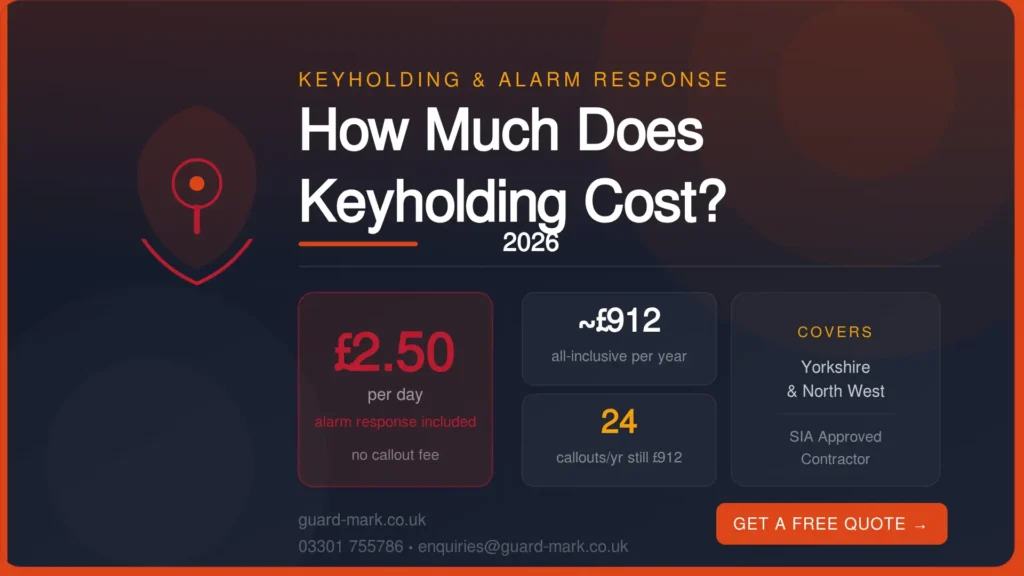
Guard Mark Security’s keyholding starts from £2.50 per day. That is the daily rate for keyholding and alarm response, with response included at no additional charge per attendance.
Comparing this against the UK industry benchmark data:
| Details | Industry Average | Guard Mark Security |
|---|---|---|
| Annual retainer | £250 to £600 | From £912 (£2.50/day) |
| Alarm response callout fee | £50 to £100 per attendance | Included, no callout fee |
| Total cost with 12 callouts/year | £850 to £1,800 | From £912 |
| Total cost with 24 callouts/year | £1,450 to £3,000 | From £912 |
| Response time guarantee | Varies | Contractually confirmed for your address |
| Written report per attendance | Varies | Yes, every attendance |
| The Guard Mark Security pricing model becomes cost-competitive from the first alarm activation of the year, and significantly more cost-effective for any business with more than a handful of activations annually. The all-inclusive daily rate removes the variable cost that makes industry-standard callout-based pricing unpredictable for budgeting purposes. |
What Does the Cheapest Keyholding Actually Deliver?
Very low-cost keyholding packages, particularly those priced below the market average retainer range, tend to involve trade-offs that matter operationally. These can include:
-
Subcontracted response rather than directly employed, vetted operatives
-
Extended response time windows that may not meet insurance policy conditions
-
Limited or no written incident reporting after each attendance
-
Minimal or no BS7858 vetting for operatives accessing your premises
The keyholding and alarm response checklist covers the specific questions to ask any provider before committing. A cheap service that does not include proper vetting, documented response, and contractual response time guarantees is not a lower-cost version of a professional service. It is a different and less compliant product.
Does Location Affect What Guard Mark Security Charges?
Guard Mark Security’s base keyholding rate applies across Yorkshire and North West England. Response times, which are contractually confirmed for each specific premises address, are agreed before the contract begins. The daily rate structure means your cost does not increase with the number of alarm activations, which is particularly valuable for premises in higher-crime areas where activation frequency tends to be higher.
Businesses across Yorkshire and Manchester and North West England access the same service standard at the same base pricing structure.
What Is the True Cost of Not Having Professional Keyholding?
Cost comparisons between security providers are useful. The more important comparison for most businesses is between the cost of professional keyholding and the cost of a single commercial incident that went unresponded or received a slow, inadequate response.
The average cost of commercial break-ins and security guard hiring varies significantly by premises type and incident severity. For context:
-
A single commercial break-in with stock loss, glazing replacement, emergency locksmith, and insurance excess routinely costs several thousand pounds
-
A failed insurance claim because the keyholder conditions in the policy were not met adds the full claim value to that cost
-
Operational disruption, lost trading time, and staff impact compound the direct financial loss
At £2.50 per day, Guard Mark Security’s annual keyholding cost of approximately £912 needs to be set against the realistic cost of one incident, not against the cost of doing nothing. Doing nothing has a cost. It is just deferred.
The right question is not whether professional keyholding services are affordable. It is whether your current arrangement will actually work when it needs to.
What Else Can Be Combined With Keyholding and What Does That Cost?
Keyholding covers the alarm response and access management function. For some businesses, it is the complete security solution. For others, particularly those with large external footprints, construction sites, or high-value assets, additional services complement keyholding to cover what it does not.
Guard Mark Security’s other services integrate directly with keyholding under a combined arrangement.
What Does Mobile Patrol Cost When Added to Keyholding?
Mobile patrol services from Guard Mark Security start from £25 per visit. For a business requiring three randomised overnight patrol visits, nightly patrol coverage costs approximately £75 per night. On a five-nights-per-week basis, that is around £375 per week for patrol cover, in addition to the keyholding base rate.
For businesses that need both reactive alarm response and proactive visible deterrence, this combination produces significantly stronger protection than either service alone. The CCTV blog covers how CCTV tower deployment pricing works for open sites where patrol alone cannot cover the full area.
How Does Construction Site Keyholding Pricing Work?
Construction site security pricing for keyholding follows the same base rate structure, but the arrangement is tailored to the specific access and layout requirements of an active site. As the build progresses through phases, Guard Mark Security updates the site briefing for operatives without changing the pricing structure.
For construction clients, CCTV tower services are often added to keyholding to cover wide site areas, particularly during the overnight and weekend periods when the site is fully unoccupied. The combined cost of keyholding and CCTV tower deployment for a construction site is typically significantly lower than the cost of static manned guarding for the same coverage period.
Is There a Minimum Contract Length for Guard Mark Security Keyholding?
Guard Mark Security does not operate on rigid long-term contract structures. The service is designed to be flexible enough to reflect the reality of commercial premises, which may change ownership, change use, or have varying security needs across different periods of the year.
Contact Guard Mark Security directly to discuss the arrangement that works for your specific premises and timeline.
What Should You Look for Beyond Price When Choosing a Keyholding Provider?
Price is one factor in the keyholding decision. The compliance and service delivery factors that determine whether the arrangement actually works are at least as important as the daily rate.
What Accreditations Should Every Keyholding Provider Hold?
The minimum standards for any commercial keyholding provider:
-
SIA licence for every operative attending your premises, verifiable on the public SIA register
-
BS7858 vetting for all personnel, covering criminal records, five-year employment history, and identity verification
-
SIA Approved Contractor status at company level, verifiable on the SIA register
-
Full public liability insurance, with a certificate available on request
Guard Mark Security holds SIA Approved Contractor status, carries full public liability insurance, and confirms all operative licences and vetting in writing before any contract begins. About Guard Mark Security covers the full compliance and accreditation framework.
Frequently Asked Questions
1- How much do Keyholding cost in UK in 2026?
UK keyholding annual retainers typically range from £250 to £600 per year, with callout fees of £50 to £100 per attendance charged separately. Guard Mark Security charges from £2.50 per day (approx. £912/year) with alarm response included and no callout fee. For any business with more than a few activations per year, the all-inclusive model is more cost-effective.
2- What is the average daily rates for keyholding?
The industry average annual retainer of £250–£600 equates to approximately £0.68 to £1.64 per day for the retainer alone. Guard Mark Security’s all-inclusive daily rate of £2.50 per day covers both keyholding and alarm response with no additional callout charge.
3- Does Keyholding include Alarm Response?
Not always. Many providers charge a separate callout fee of £50 to £100 every time an operative attends. Guard Mark Security includes alarm response in the base daily rate with no additional per-attendance charge. Always confirm whether alarm response is included or billed separately before signing any keyholding contract.
4- Is keyholding required for commercial insurance?
Many commercial insurance policies include keyholder conditions — requirements that a nominated, reachable keyholder responds to alarm activations within a defined time window. Failing to meet these conditions can result in a voided claim. A professional keyholding provider with contractual response time guarantees and written attendance records satisfies these conditions. Check your specific policy wording for exact requirements.
5- What areas does Guard Marks Security cover for Keyholding?
Guard Mark Security’s keyholding service covers Yorkshire and North West England, including Bradford, Leeds, Manchester, and surrounding areas. Response times are contractually confirmed for each specific premises address before the contract begins. The base daily rate applies across the full coverage area.
6- What should a Keyholding services include?
A professional keyholding arrangement should include: alarm response with a contractual response time, external and internal premises check on every attendance, a written incident report after each visit, SIA-licenced and BS7858-vetted operatives, and full public liability insurance. Guard Mark Security includes all of these as standard with every keyholding contract.
7- Can keyholding be combined with mobile patrols and CCTV?
Yes. Guard Mark Security’s services integrate directly. Mobile patrol visits start from £25 per visit. Three randomised overnight patrol visits cost approximately £75 per night. CCTV tower deployment starts from £28.89 per day. For construction sites and large external footprints, a combined keyholding and CCTV tower arrangement is typically significantly cheaper than static manned guarding for the same coverage period.
8- How much does professional keyholding cost per month?
Professional keyholding services in the UK typically cost between £50-£120 per month (£2.50-£4 per day) for a single commercial premises. Guard Mark’s keyholding starts from £2.50/day. The price varies based on location, premises size and response time requirements.
9- Is keyholding cheaper than having a member of staff respond to alarms?
Yes — significantly. When you factor in the hourly rate, out-of-hours overtime, liability and personal safety risks of sending a staff member to respond to a 3am alarm, professional keyholding at £2.50/day is considerably more cost-effective.
10- Does keyholding reduce my business insurance premium?
Many insurers look favourably on businesses that use professional SIA-licenced keyholders. Some policies require it. We recommend checking your policy wording or speaking to your broker, having a certified keyholder on record can reduce premiums and improve claim outcomes.
11- What’s included in the keyholding price?
Guard Mark Security keyholding price includes: secure key storage, 24/7 alarm response, trained SIA-licenced guard attendance, incident reporting, police liaison and re-securing of premises after every attendance. There are no hidden call-out fees.
What Documentation Should a Keyholding Service Produce?
A professional keyholding arrangement produces a written incident report after every attendance. This covers the alarm activation time, the operative arrival time, findings from the external and internal check, any action taken including police contact, and the confirmed status of the premises when the operative left.
This documentation is what your insurer asks for when a claim is made. It is also the evidence trail that protects the business if questions are ever raised about the security arrangement that was in place at the time of an incident. For hospitality businesses and retail premises specifically, this documentation supports licence compliance as well as insurance requirements.