
Locking the door does not secure your business — response time does.
Most commercial losses happen after hours, when alarms activate and nobody attends quickly. A delayed response turns a simple false alarm into theft, damage, police call-out fees, or insurance complications.
This checklist helps you identify whether your current alarm response setup actually protects your property — or only alerts you while the damage happens. If you cannot confidently answer every point below, you likely need professional keyholding and response cover.
Quick Self-Check Before You Continue
Answer honestly:
-
Can you reach your premises within 20 minutes at night?
-
Are you personally listed as the alarm keyholder?
-
Would you attend alone if the alarm activates at 3am?
-
Do you keep written incident records after attending?
-
Would your insurance accept delayed attendance?
If any answer is no or unsure, your property may not actually be protected — only alerted.
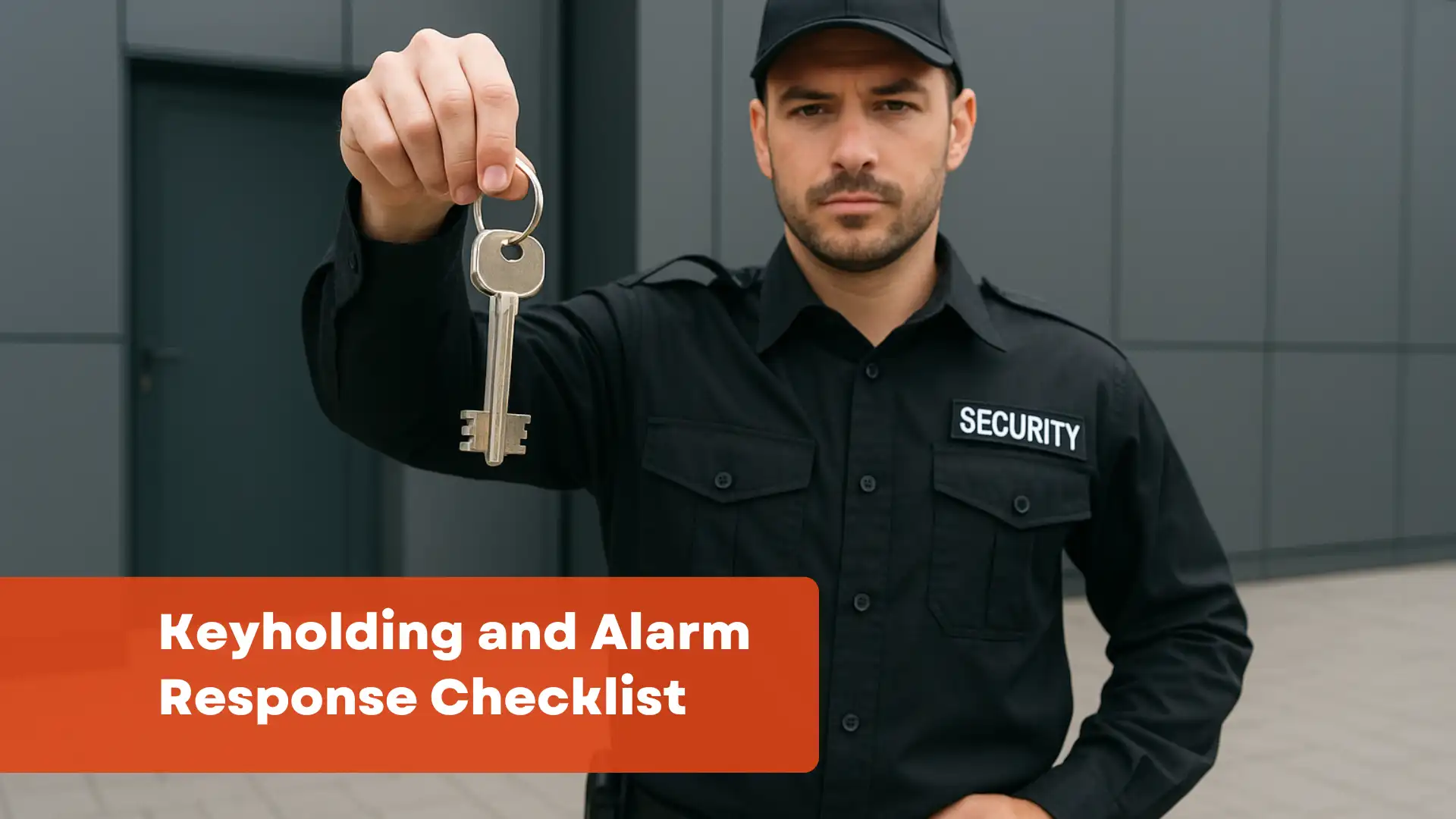
Keyholding and Alarm Response Checklist
-
Verify the security company holds proper SIA licencing for keyholding services. Not all security companies are licenced for this specific work. Check their credentials before handing over keys to your business.
-
Confirm guards responding to alarms are fully vetted through BS7858 screening. These people get access to your property unsupervised. Background checks, employment history, and identity verification must be complete before they hold your keys.
-
Ask how fast their guaranteed response time is after alarm activation. 10 minutes? 30 minutes? An hour? Speed matters when alarms go off. Get specific commitments in writing about response times to your location.
-
Check if they provide 24/7/365 coverage including bank holidays. Alarms don’t only activate during business hours. Your keyholding service needs to respond Christmas Day, Easter Sunday, 3am Tuesday. No exceptions or extra charges.
-
Request details on their alarm verification process before attending. Do they contact you first? Check with monitoring stations? Verify through CCTV? Understanding their process prevents unnecessary callouts and charges.
-
Ask what happens during false alarm callouts. Do you get charged every time regardless of whether it’s real? How do they handle repeated false alarms? Clear pricing for different scenarios matters.
-
Confirm they carry appropriate insurance for keyholding liability. If their guard damages something or loses your keys, insurance needs to cover that. Ask for proof of coverage amounts.
-
Find out where they store your keys when not responding to calls. Secure safes? Encrypted systems? Keys sitting in someone’s car overnight? Storage security matters as much as response security.
-
Check if guards conduct visual inspections during alarm responses. Walking the perimeter, checking doors and windows, looking for signs of forced entry. Thorough checks find problems simple alarm resets miss.
-
Ask about their reporting process after attending your premises. Do you get detailed reports of what they found, what they did, and what time they left? Documentation protects both parties.
-
Verify they can liaise with police if break-ins or crimes are discovered. Guards need to know when to call police, how to preserve evidence, and how to secure premises until officers arrive.
-
Confirm their backup procedures if assigned guards are unavailable. What happens if your regular keyholder calls in sick at 2am? Backup guards should already have your keys and codes ready.
-
Ask if they offer additional services during alarm responses. Can they reset alarms? Lock up properly if you left doors unlocked? Handle minor maintenance issues they spot? Added value services help.
-
Check their communication methods for reaching you during incidents. Phone calls? Text alerts? Email reports? You need to know what’s happening at your business immediately.
-
Request references from current clients using their keyholding services. Actually call those references. Ask about response times, reliability, and how incidents were handled.
What Your Answers Mean
If you could not confidently confirm every checklist point, your security response may rely on availability rather than a guaranteed procedure.
Many businesses only discover gaps after a real incident — delayed response, false alarm penalties, or insurance claim issues.
Understanding The Real Cost of Alarm Response
Keyholding services are not priced only by a monthly fee.
They depend on response time, risk level and attendance responsibility.
Very low-cost services often subcontract responses or have long attendance windows.
A compliant response service provides documented attendance and trained responders — which insurance companies require after incidents.
The true cost is not the service price.
The true cost is a delayed response.
Check If Your Business Is Properly Covered
Guard Mark Security provides professional keyholding and alarm response services across Yorkshire. Our SIA licenced guards respond to alarm activations 24/7/365 with guaranteed response times specific to your location.
We store all client keys in secure encrypted systems and provide detailed reports after every attendance. Our guards are BS7858 vetted and fully insured for keyholding work. Ring 03301755786 or email [email protected] to discuss protecting your business when you’re not there. Don’t leave your property security to chance or untrained responders.