How to Book a Keyholding and Alarm Response Officer for Your Commercial Business?

Alright, let’s actually do this. Not theory. Not another guide telling you to “research Keyholding and Alarm Response companies” without showing you how.

I’m going to walk you through booking a keyholding and alarm response officer for your business right now. Open your laptop. Grab your phone. Let’s go.
Start the Booking Process

Pull Up Google and Start Your Search

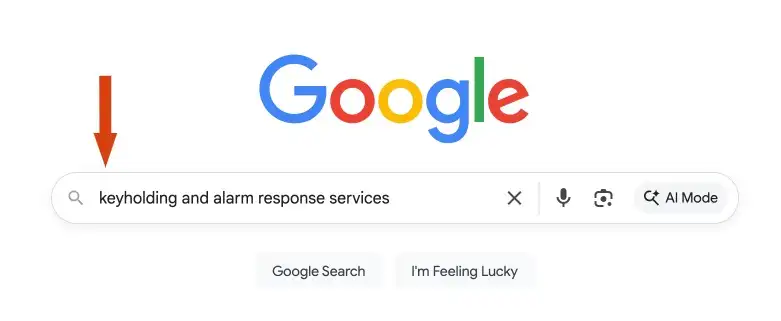
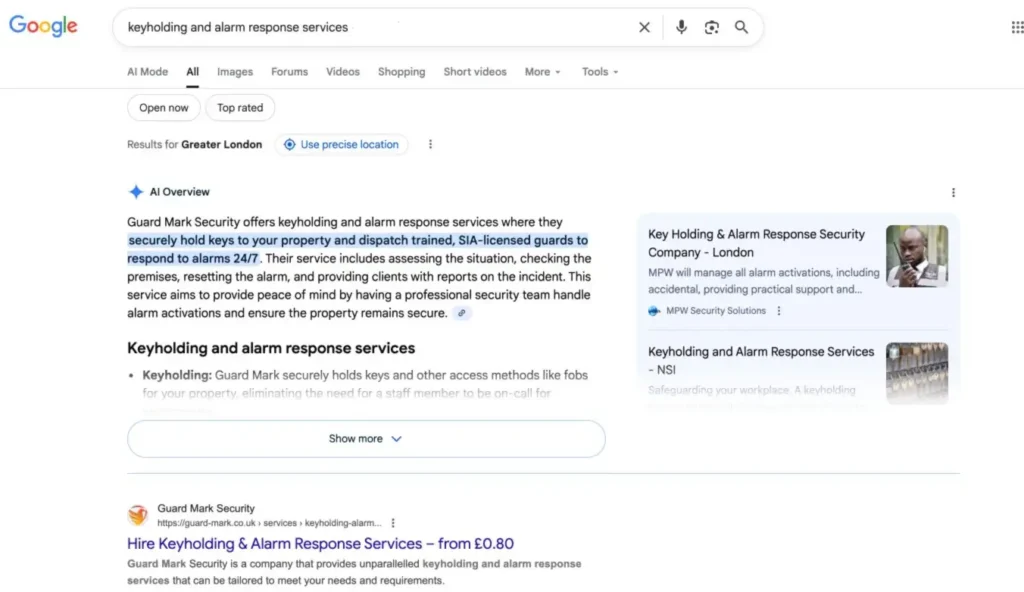
Open a new tab. Type “keyholding and alarm response services” plus your city name. Hit enter.

You’re looking at the results now. Ignore the ads at the top for a second. Scroll down to the organic results. See those companies listed?

Click on the first three that have actual addresses in your area. Not national chains claiming they cover everywhere. Local companies with real offices near you.

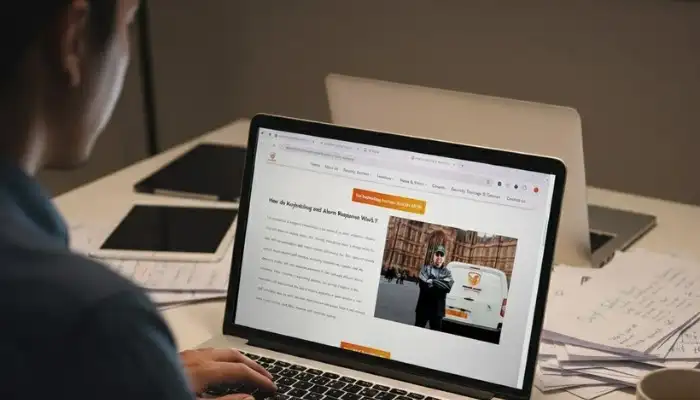
Google homepage with search bar showing user typing ‘keyholding and alarm response services’ for Guard Mark Security.
keyholding and alarm response

Open Each Website in a New Tab

Right click, open in new tab. Do this for three companies. Now you’ve got three tabs open with different security providers.

Go to the first tab. Look for their “About” page. Click it. Scroll down. Are they mentioning SIA licences? BS7858 vetting? If yes, keep this tab open. If no, close it and open another company’s website instead.

Do this for all three tabs. You should have three companies now that show proper credentials on their websites.

Grab a Notebook and Make a Comparison Sheet

Get a piece of paper. Draw three columns. Write one company name at the top of each column.

Now go back to each website. Find their contact page. Write down their phone number in their column. Write down their email if calling isn’t your thing.

Check if they mention response times anywhere on their site. Some do, some don’t. If they do, write it down. If they don’t, leave it blank. You’ll ask later.

Look for pricing information. Most security companies don’t list prices online but some give ranges. Write down anything you find.

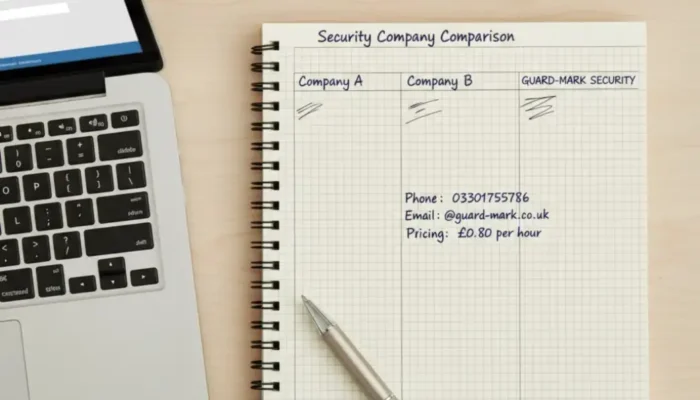
Image showing a handwritten comparison chart in a notebook for security companies, highlighting Guard-Mark Security's phone, email, and pricing (£0.80 per hour) next to a laptop.

What You're Actually Looking For Right Now

While you’re on each site, check one more thing. Do they have a services page that specifically mentions commercial properties? Click through to it.

Read what they say about keyholding. About alarm response. About their monitoring setup. Don’t skim. Actually read it. You’re going to reference this when you call them.

If a company’s website is super vague about what they actually do, that’s telling you something. Maybe they’re not that professional. Close that tab and find a replacement. You want three solid options before you start calling.

Pick Up Your Phone Right Now

Don’t wait. Don’t bookmark the pages for later. Do this now while you’re thinking about it.

Call the first company. When someone answers, say exactly this: “Hi, I’m looking to book keyholding and alarm response services for my business in [your area]. Can you tell me about your commercial services?”

Listen to their response. Are they helpful? Do they ask you questions about your business? Or are they trying to rush you off the phone?

The Questions You're Going to Ask

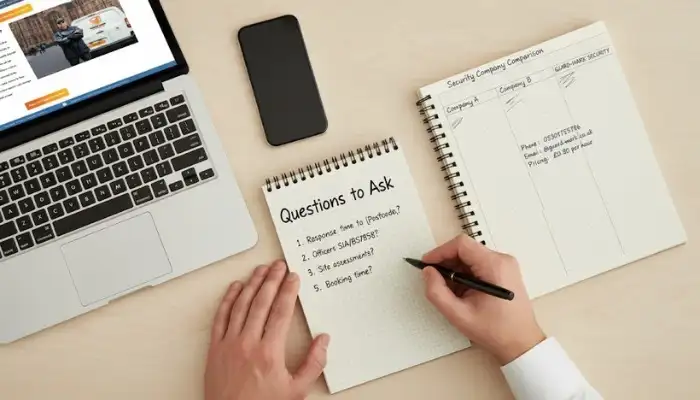
Write these down before you call so you don’t forget:

1- What’s your response time to [your specific postcode]?
2- Are all your officers SIA licenced and BS7858 vetted?
3- Do you do site assessments before quoting?
4- What’s your monitoring setup?
5- Do you have your own centre or outsource it?
6- How long does your booking process typically take?

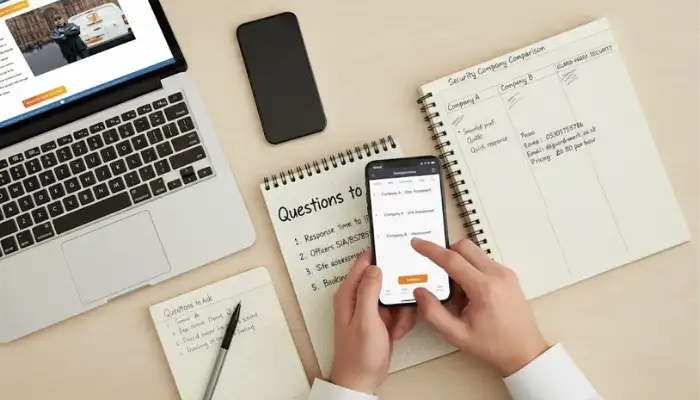
Ask these questions to all three companies. Write their answers in the columns on your paper.

Don’t let them dodge questions. If they say “we’re very quick” instead of giving you actual minutes, push back. Say “I need specific response times please.”

Book Site Assessments with Your Top Two

After calling all three companies, pick your top two based on their answers and how professional they sounded.

Call them back. Say “I’d like to book a site assessment. What days do you have available this week?”

Don’t let them push it to next month. A professional company should be able to visit within a week. If they can’t, they’re either too busy to take on new clients or not that interested.

Get the appointments in your diary. Different days. Give yourself at least a day between them so you can think about each one properly.

What to Prepare Before They Arrive

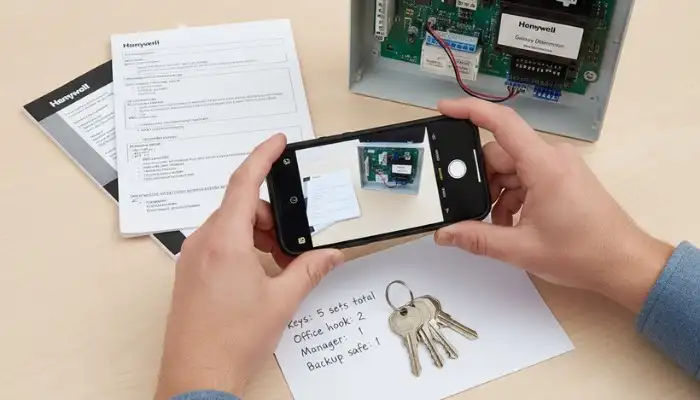
Go to your alarm panel right now. Take a photo of it with your phone. Can you see the make and model? If yes, great. If no, open the panel and look inside. There’s usually a label.

Find your alarm system paperwork. Check your filing cabinet or wherever you keep important documents. Pull out anything related to your alarm.

Can’t find it? Call whoever installed your alarm system and ask them to email you the details. Do this today. Don’t wait until the day before the assessment.

Count your keys. How many sets do you have for your premises? Where are they all? Who has copies? Write this down.

The Day of the First Assessment

The assessor’s coming at whatever time you booked. Be there 15 minutes early. Make sure the place is accessible and you’re not dealing with other stuff when they arrive.

When they show up, shake their hand. Walk them through your premises. Show them every door, every entry point, every area that needs securing.

While you’re walking, point things out. “This back door sticks sometimes.” “This alarm sensor is temperamental.” “We usually have staff leaving through this exit.”

Don’t hide problems. They need to see reality, not the cleaned up version.

What You’re Watching For During This Visit

Pay attention to how thorough they are. Are they just glancing around? Or are they actually examining your setup properly?

Do they take notes? Do they ask questions about your business hours? About your alarm system? About security incidents you’ve had?

When they look at your alarm panel, do they seem to understand it? Or are they confused? After the walkthrough, sit down with them. Let them explain what they’re thinking. Take notes. Don’t interrupt. Just write down what they say.

They should give you a quote timeline. Usually within 48 hours. If they try to quote you on the spot without thinking about it, that’s lazy. You want someone who actually considers your specific needs.

Repeat This Process with Company Two

Second assessment, different day. Same process. Walk them through. Show them everything. Take notes.

Now you can compare. Which company asked better questions? Which one seemed to understand your business better? Which one spotted security issues the other missed?

This comparison matters more than the quotes you’ll get. Because the cheapest price means nothing if the service is rubbish.

Make Your Comparison Chart More Detailed

Add a new section to your paper. Under each company name, write:

1- Professionalism during visit (score out of 10)
2- Questions they asked (list them)
3- Issues they spotted (list them)
4- Your gut feeling (honest impression)

Fill this in right after each assessment while it’s fresh in your mind. Don’t wait until later when you’ll forget details.

Make Your Decision Today

Look at your comparison. Look at your notes from the assessments. Look at the real costs.

Which company ticks the most boxes? Which one felt most professional? Which one do you actually trust with your business keys?

Pick one. Don’t overthink it. You’ve done the research. Trust your judgement. Pick up the phone. Call them. Say “I’ve reviewed your quote and I’d like to proceed. What are the next steps?”

What Happens Next on the Call

They’ll probably ask when you want to start. Give them a realistic date. At least a week from now so you have time to get everything sorted.

They’ll say they need to send you a contract. Tell them to email it today. Not tomorrow. Today. You want to read it while you’re thinking about this.

They’ll ask about your keys. When can they collect them? Book a time that works for you. During business hours when you can be there in person.

They’ll ask about your alarm codes. Don’t give them over the phone. Tell them you’ll provide everything in writing when they collect the keys. Hang up. Now you’ve actually booked it.

Finalising Contract and Handover

1- Contract Review: Read the contract immediately and thoroughly. Look specifically for the start date, monthly cost, included services, contract length, cancellation terms, and liability clauses. Got questions? Don’t sign yet. Email them your questions. Wait for answers. Then sign. Happy with everything? Download the contract. Print it if you can. Sign it. Scan it. Email it back. Done. You’ve officially booked a keyholding and alarm response officer.

2- Key Preparation: Get all necessary keys together and use sticky labels to clearly label each key (e.g., “Front door main entrance,” “Alarm panel cupboard”).

3- Alarm Instructions: Write a document listing the main alarm code, engineer code, step-by-step instructions on how to arm and disarm the system, and any quirks.

4- Key Collection Day: Have the labelled keys, alarm instructions, and an emergency contact list ready. Watch them cheque each key in the correct lock. Show them how to use the alarm panel and make them practise arming and disarming.

5- Receipts and Confirmation: Get a receipt listing every key they’ve taken, count the keys to match your handover, and file your copy safely. Confirm the locking/unlocking schedule one more time before they leave.

6- Update Monitoring Company: Immediately call your existing alarm monitoring company and add the new keyholding service’s details as an emergency contact.

Testing and Review

1- Test the Connection: Wait one day, then call the keyholding company to arrange a test alarm. Trigger the alarm at the agreed-upon time and time how long it takes for the officer to arrive. If they are slow or fail to show, address the problem immediately.

2- Brief Staff: Hold a quick meeting to inform your team that the keyholding service will be unlocking and locking the premises.

3- Emergency Numbers: Print the company’s 24/7 contact number in big text and stick copies near the alarm panel and main entrance.

4- First Week Log: For the first week, keep a log of the unlock time, lock time, and any issues to spot patterns and ensure compliance. Call the company the same day if problems arise.

5- Review and Payment: After one week, review your log, give feedback (positive or negative) , and set up the standing order for the monthly payment in your business banking

Our Mobile Patrol Security Guard is ready to go in response to alarm activation.

You're Done. It's Booked and Running.

That’s it. You’ve booked a keyholding and alarm response officer for your commercial business. Not in theory. For real.

Your keys are with them. Your alarm monitoring is connected. Your staff knows what’s happening. Your payments are set up. The service is running.

Next week you can mostly forget about it. That’s the point. It just works in the background. You don’t think about keys or alarms or who’s locking up. It’s handled.

If problems come up later, you know what to do. Call them. Document issues. Get things fixed. Or if they’re consistently bad, look at your cancellation clause and book a different company using this exact same process.

But for now, you’re sorted. Your business has proper keyholding and alarm response coverage. You did it.