
Retail premises require keyholding services that balance security with business continuity, particularly for managing alarms outside trading hours. This checklist ensures retail keyholding arrangements protect stock whilst supporting operational requirements.
Quick Self-Check Before You Continue
Answer honestly:
-
Do your keyholders know the difference between your alarm zones and how to respond to each one?
-
Are police coordination procedures documented so keyholders know exactly when and how to request attendance?
-
Do you have approved emergency glazing contractors on a list your keyholders can action immediately?
-
Is your cash room specifically excluded from keyholder access and documented in your contract?
-
Are your notification chains current so the right managers are contacted when incidents occur?
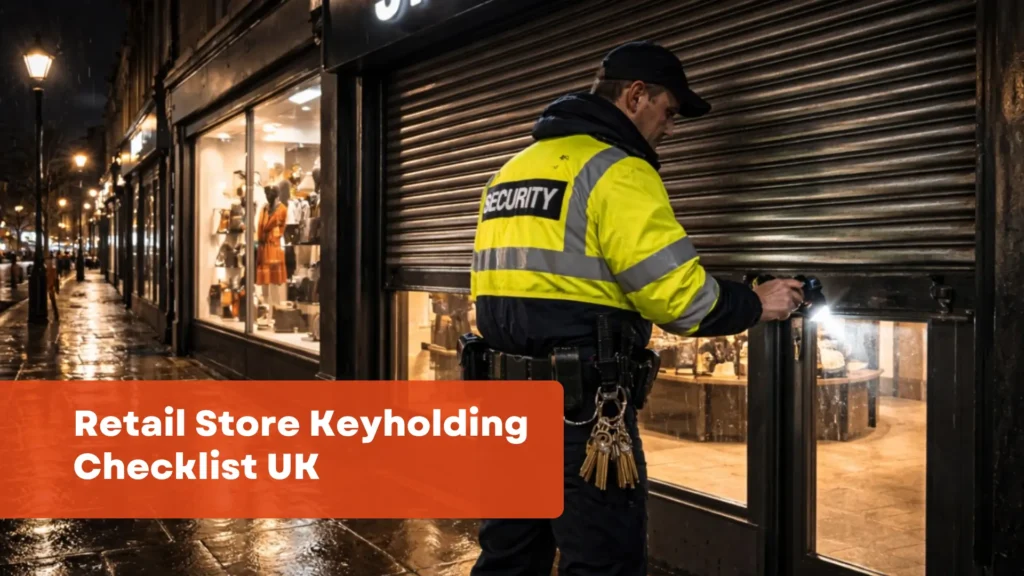
If any answer is no or unsure, an alarm activation at your store may result in delayed response, unsecured premises, or a break-in that escalates because the right people weren’t contacted quickly enough.
-
Verify keyholders understand retail premises layouts and typical alarm zones – Retail stores often have multiple alarm zones: sales floor, stockrooms, offices, cash rooms. Keyholders need understanding which areas trigger which alarms and appropriate response procedures for each zone.
-
Establish procedures for different alarm activation scenarios – Entry/exit alarms require different responses than internal movement detection or panic alarms. Define keyholder actions for each scenario including when to await police attendance versus when immediate building entry is appropriate.
-
Create cash handling and safe security procedures – Document whether keyholders have safe access, procedures if cash is visible, and security protocols for protecting cash rooms. Many retailers specifically exclude keyholders from cash access to limit liability.
-
Define stock security checks during keyholder attendance – Establish whether keyholders conduct quick stock checks in high-value areas after incidents. Determine what they should look for, what to photograph, and how to report potential theft or damage.
-
Implement keyholder coordination with 24-hour retail support centres – Many retail chains operate support centres monitoring alarms and coordinating responses. Define communication protocols between keyholders and support centres including information sharing and decision-making authority.
-
Establish procedures for police coordination and attendance – Retail premises often receive priority police response for confirmed break-ins. Document procedures for requesting police attendance, meeting police on site, and providing access for police investigations.
-
Create board-up and emergency glazing procedures – Broken windows require immediate securing. Establish approved contractor lists for emergency glazing or boarding, authorisation procedures for instructing works, and cost limits keyholders can approve.
-
Define staff notification procedures after incidents – Determine who should be contacted when incidents occur: store managers, regional managers, security managers, loss prevention teams. Different incidents may require different notification chains.
-
Implement procedures for resetting alarms and securing premises – Document the process for resetting alarm systems, testing all zones, and confirming premises are properly secured before keyholders depart. Include requirements for confirming alarm company receipt of reset confirmation.
-
Establish opening assistance procedures if required – Some retailers want keyholders available to assist if staff cannot access premises during opening hours. Define availability times, response expectations, and any additional charges for non-emergency assistance.
-
Create procedures for managing stock deliveries outside hours – If your store receives deliveries outside trading hours, establish whether keyholders can provide access, verification procedures for delivery drivers, and documentation requirements.
-
Review keyholding coverage during peak trading periods – Retail premises may need enhanced keyholding response during busy periods: Christmas trading, sales events, new product launches. Verify the keyholding provider can meet increased demands during peak times.
-
Implement procedures for managing fire alarm activations – Retail premises with sensitive smoke or heat detection systems may experience false fire alarms. Define keyholder response procedures, fire service coordination, and system reset protocols.
What Your Answers Mean
Retail keyholding failures tend to be expensive and visible. A delayed alarm response means stock gone before anyone arrives. A keyholder who doesn’t know your alarm zones wastes time in the wrong area.
A broken window left unsecured overnight because emergency glazing wasn’t arranged means further theft and weather damage by morning. These aren’t unlikely scenarios. They’re exactly what happens when retail keyholding arrangements are set up quickly and never properly reviewed against the specific layout and risks of your store.
Understanding The Real Cost of Retail Keyholding
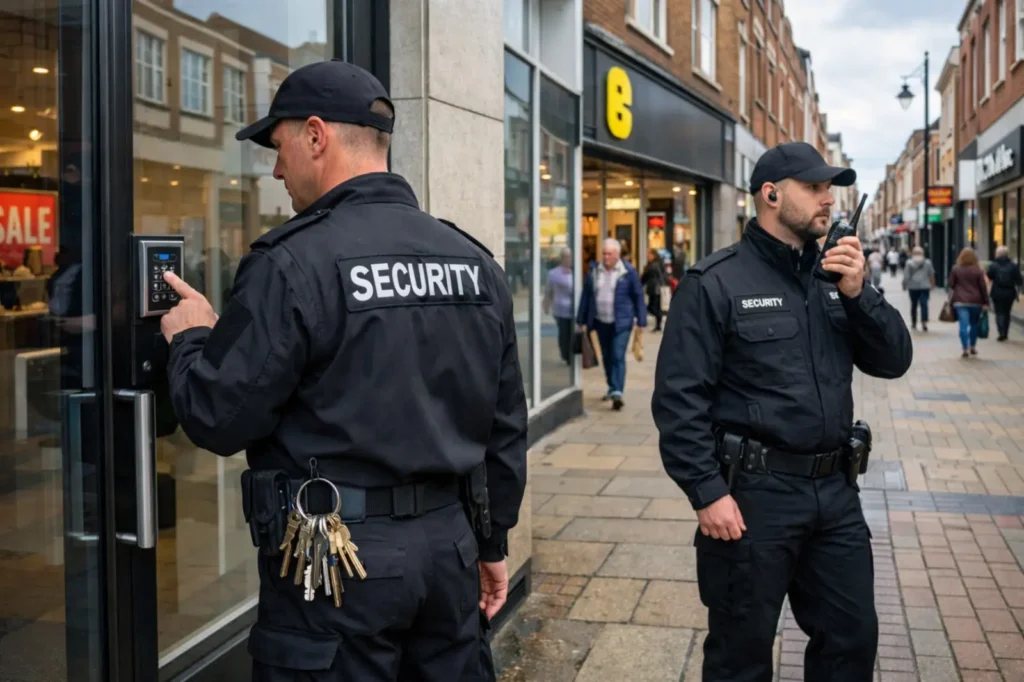
Retail businesses are repeat targets once thieves identify a weak alarm response. If your keyholder takes 45 minutes to attend and police aren’t called promptly, word travels. The same premises get hit again, usually faster the second time because entry points are already known.
Stock loss is the obvious cost. The less obvious costs are the emergency glazing bill, the insurance excess, the staff disruption the following morning, and the premium increase at renewal once you’ve made a claim. All of that traces back to whether your keyholding arrangement was actually fit for purpose.
The real cost isn’t the retail keyholding monthly fee.
The real cost is a repeat break-in, a stock loss claim, and an insurance renewal conversation where your response times don’t hold up to scrutiny.
For retail keyholding services across Yorkshire, contact Guard Mark Security on 03301755786. We provide rapid response keyholding for retail premises with experience managing retail-specific security requirements. Email [email protected] for retail keyholding information.